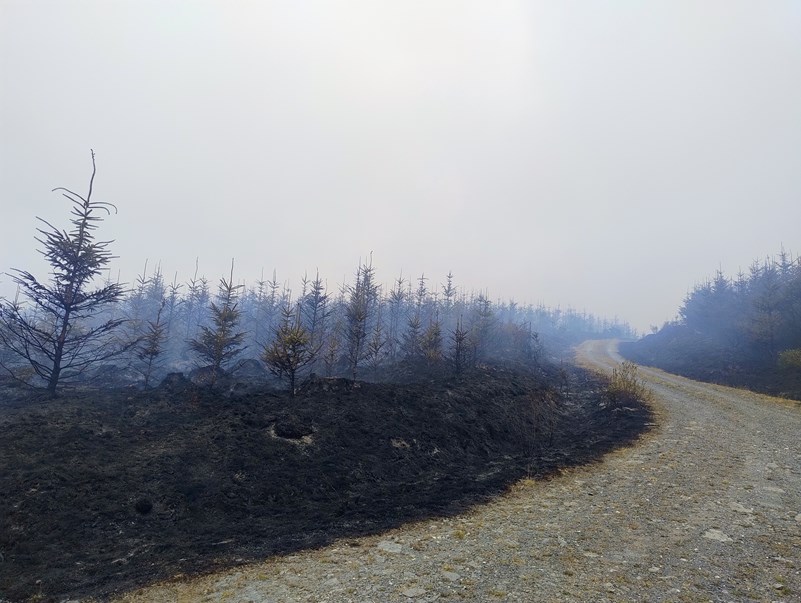
Flintshire Woodlands contributes vital supporting role in tackling Welsh wildfire
The expertise of Flintshire Woodlands staff played an important role in a complex and co-ordinated response to a serious wildfire in Wales.
Cefn Ystrad Ffin, a woodland managed by Flintshire Woodlands (the trading arm of Scottish Woodlands in Wales and western England) was part of a large area affected after the wildfire broke out near Llandovery in Carmarthenshire.
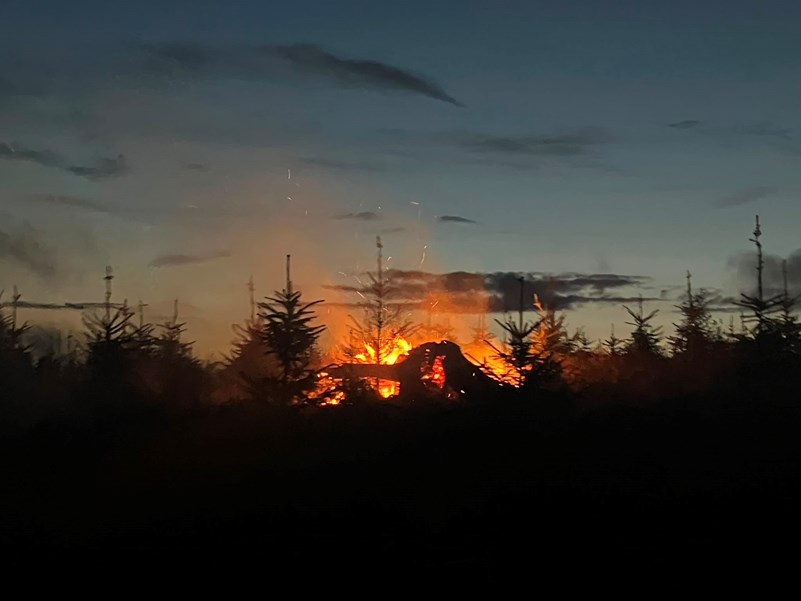
Forest Manager David Crozier was on-site at Cefn Ystrad Ffin when the blaze broke out near a public road, and received a warning call from a local farmer.
Mr Crozier then alerted Senior Forest Manager Charles Gittins, based in the company's Chirk office in North Wales, who spoke to Scottish Woodlands' Technical Director Simon Oldham to agree a plan of action.
Over the next few days, there was detailed liaison with local fire commanders, landowners and farmers who were helping efforts to stop the spread of the fire on the ground - and a helicopter operator, which was brought in to help fight the fire from above.
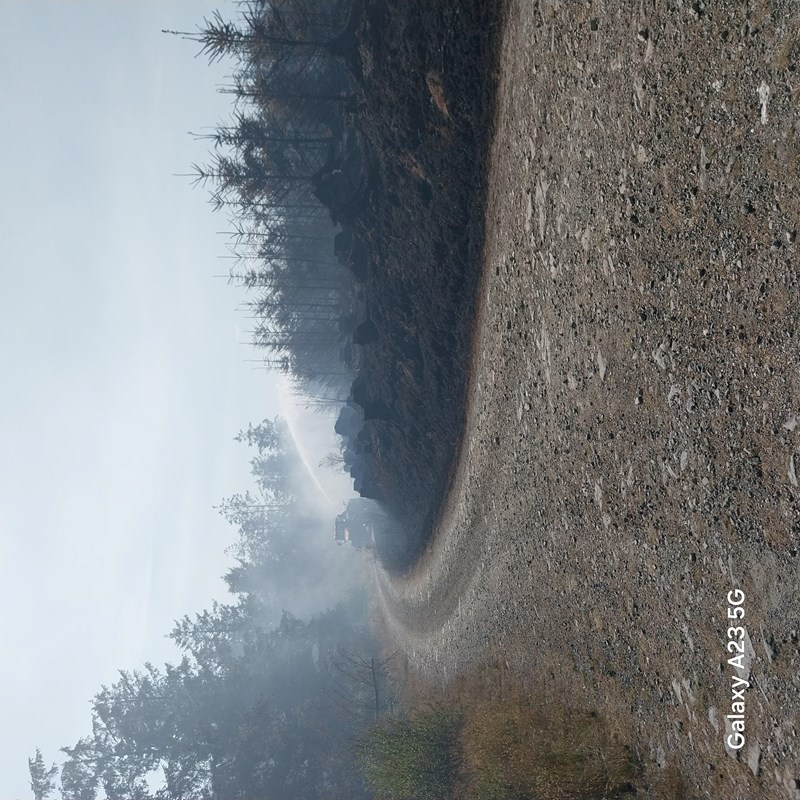
The fire started on Wednesday 12th August near the village of Rhandirmwyn,. It initially affected a woodland called Nantybai, before spreading to Cefn Ystrad Ffin, a site of almost 600 hectares planted mainly with timber producing spruce crops. A major incident was declared on Thursday 13th and local residents had to be evacuated from their homes.
Flintshire Woodlands worked with the landowner to confirm that insurance cover was available to bring in a helicopter.
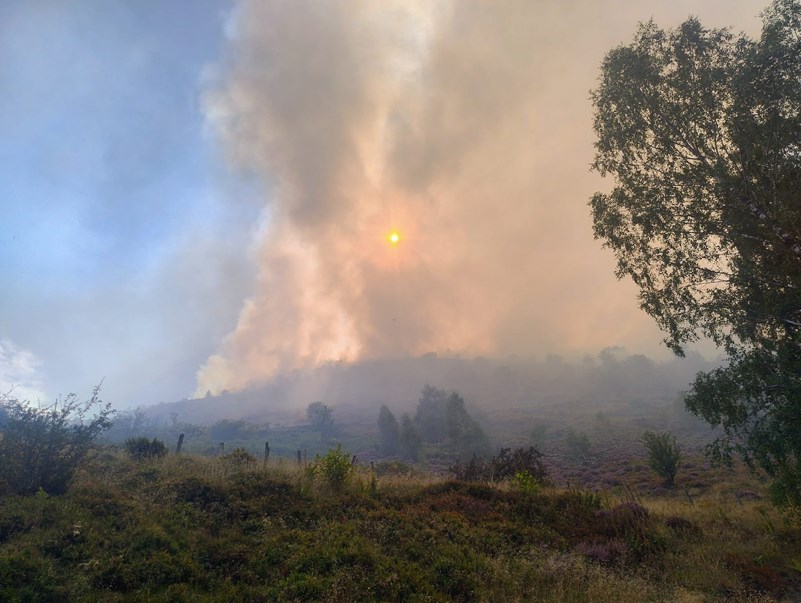
Getting that aerial support was difficult, as most suitably equipped helicopters were busy fighting a spate of wildfires elsewhere in England and Wales as the UK recorded its hottest day of the year on 13th August (38.1°C, London). However, after numerous conversations with operators, Mr Gittins secured a helicopter on Friday 14th, which started to ‘water drop’ the fire from above early on Saturday 15th - continuing throughout the weekend and into Monday 17th. The fire was being brought under control by then, but the incident was only closed on Tuesday 18th August after remaining hotspots were extinguished.
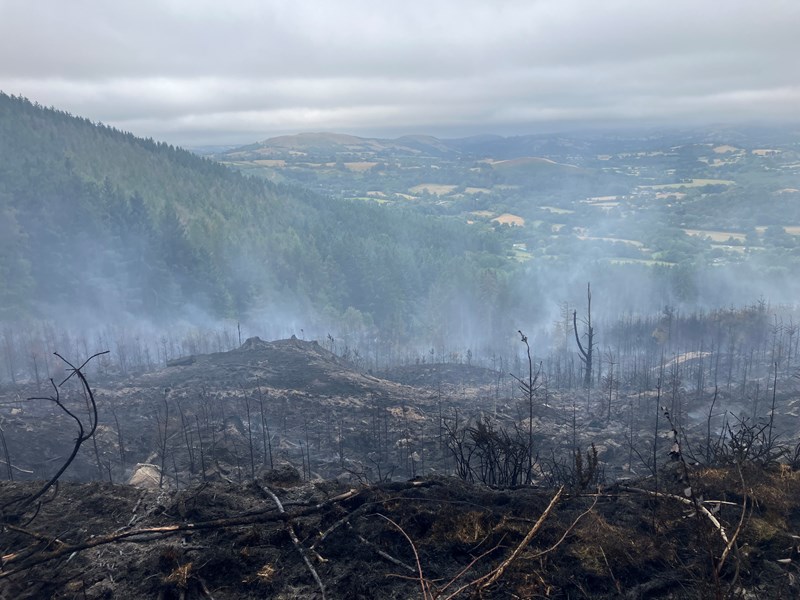
"We worked with the landowner to ensure the insurance was in place to pay for the helicopter, then secured the helicopter, which played a significant role in bringing the wildfire under control," said Mr Gittins.
"We also worked closely with the local farming community who, without hesitation, provided water bowsers to ensure the water was in the most accessible and convenient place for the helicopters to maximise the time they were able to spend dropping water on the fire."
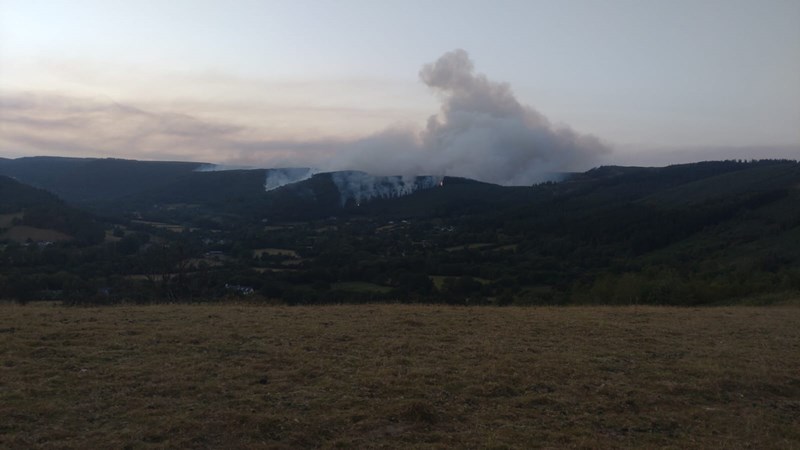
David Crozier added: "It was coincidental but very helpful for me to be on site when we were informed about the fire. It meant I was able to introduce myself to the local fire commander, and help play my part in the coordinated response, as the incident developed very rapidly to begin with. I stayed overnight in my truck on Friday night, so I was on site for the helicopter starting its work on Saturday.”
"It also helped to coordinate with neighbouring forest managers, landowners and fire services locally to identify where to create fire breaks to stop the spread."
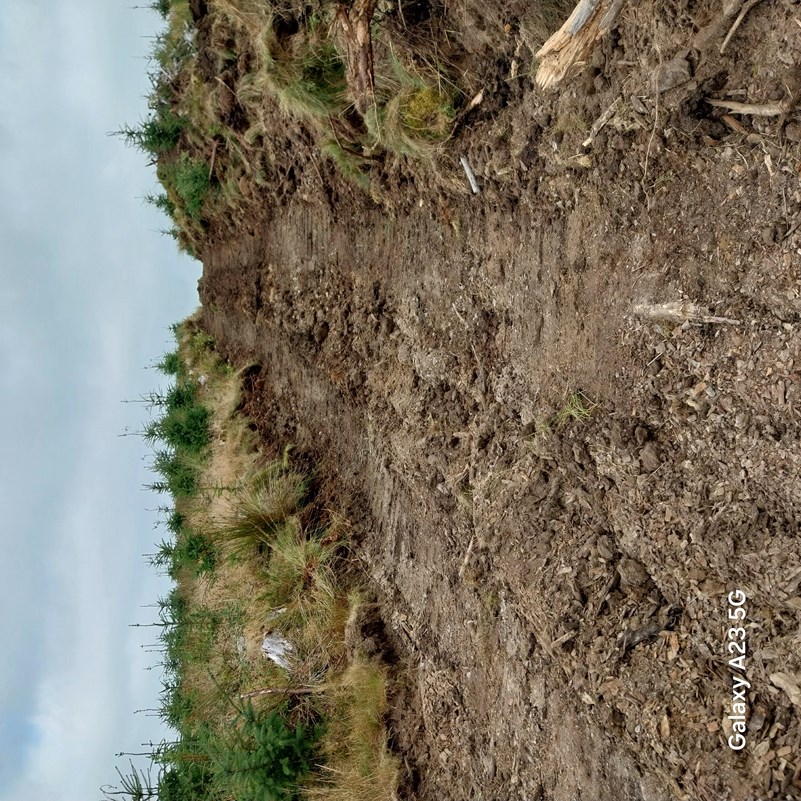
He added: "The response by the Mid and West Wales Fire and Rescue Service - and by local farmers and communities - was fantastic, with a huge amount of work being done in a very difficult situation."
Simon Oldham, Scottish Woodlands' Technical Director, said: "A planned and coordinated response is so crucial in these situations, and we were pleased to be able to bring our own detailed procedures into the wider effort to tackle the wildfire. It was a really impressive team effort in very challenging circumstances. As foresters it’s clear we have to be well prepared to deal with wildfire events like this as the climate changes and fires become more frequent and more damaging. We also need to keep planting trees which absorb CO2 and slow the pace of climate change."
The damage at the Flintshire Woodlands managed forest is still being fully assessed, with the majority of trees affected being younger trees planted within the last ten years.