Scottish Woodlands at heart of positive policy conference
The UK’s Forestry Minister signalled her strongest support yet for productive forestry and home-grown wood use at a policy conference sponsored by Scottish Woodlands Ltd.
In a video message from the COP30 climate summit in Brazil, Mary Creagh MP sent out a hugely positive message, saying: “Timber is not a niche material, but a national asset…it belongs at the heart of our housing strategy, our climate response, and our rural economy.”
Presenting to Confor’s annual policy conference at Westminster, Timber in Construction: From Roadmap to Reality, she said: “We need to plant more trees - and more productive species… that store carbon and provide the timber we need for tomorrow’s homes.”
Two key themes in delivering the Timber in Construction Roadmap are skills and investment, which were discussed in panel sessions - both featuring Scottish Woodlands speakers.
Isla Campbell, a Forest Manager based in Dingwall, talked about the Forestry Operations New Entrants Programme, a 5-week course at the Scottish School of Forestry (SSF) in Inverness, targeted at young people and career changers.
She explained that Scottish Woodlands provided technical support and equipment for the programme (funded by Par Equity and Aviva Investors) and added: “The participants were funded for the duration of the course and given a short, sharp introduction to the practical skills needed to work in forestry operations - to make them feel ready to go into the world of work and hit the ground running.”
The practical skills taught on the course included tree planting and management, driving All-Terrain Vehicles, pesticide spraying and the use of brush cutters and strimmers.
Ms Campbell also described her experience of doing a 4-year forestry course at the SSF, followed by Scottish Woodlands Graduate Development Programme (applications for 2026 are open until 1st February - more information here]. This had provided her with hands-on, practical experience - supported by a mentor - after her time learning at SSF, she explained.
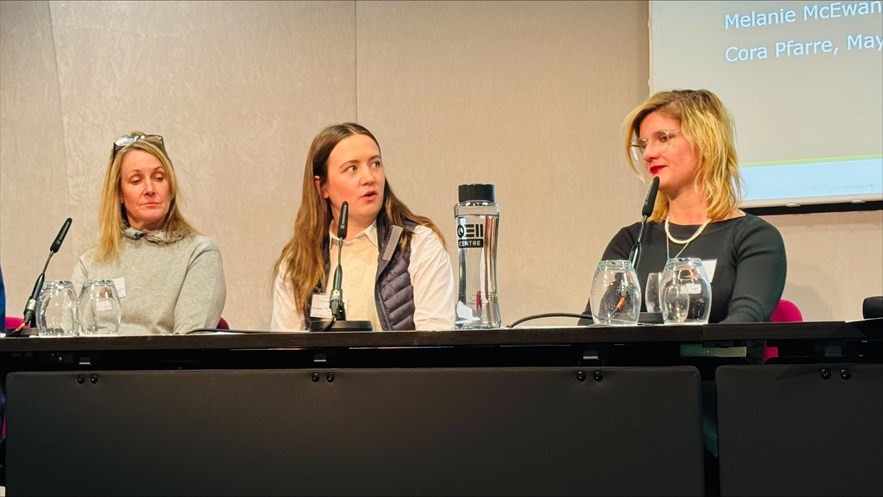
The skills panel also heard about the Forestry Sector Skills Plan, launched this year and running until 2035, a Labour Market Intelligence census, and the launch of the Forestry Training Service, to tackle specific skills shortages in the industry.
David Robertson, Investment & Business Development Director at Scottish Woodlands Ltd, joined the panel discussing barriers to investment in forestry schemes.
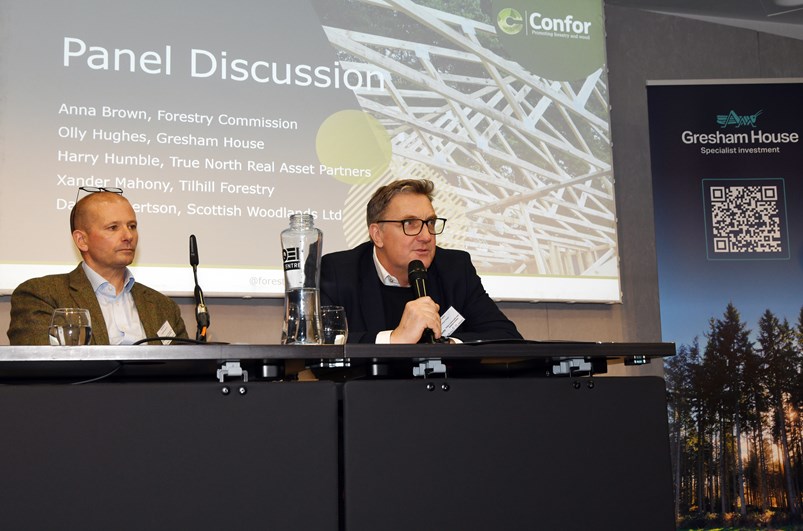
One main issue, said Mr Robertson, was regulators demanding that developers go way above the UK Forestry Standard (UKFS) and deliver UKFS+ or UKFS++ schemes. He said this often added to already lengthy timeframes in getting schemes approved, and was subject to regional variations and inconsistencies.
“We need stable regulation with clear and defined outcomes,” he said, “not 5 different conservancies and 50 woodland officers all with different opinions.”
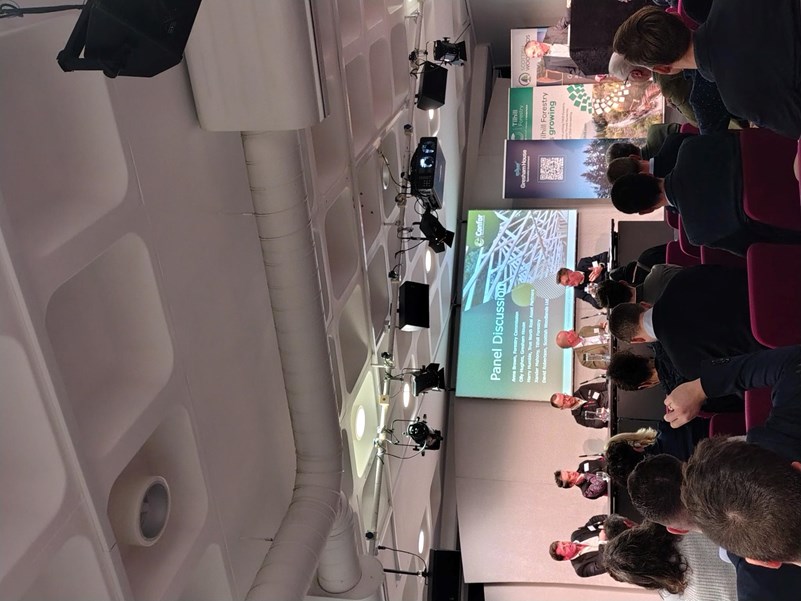
Mr Robertson said he and his colleagues were engaging in “courageous conversations” to address criticism of planting schemes at local level. The panel discussed how vocal criticism at local level was often ill-informed, but could create a narrative that led to delays in planting applications and put off investors. Critics of productive forestry were looking more to legal avenues such as judicial review to challenge schemes.
In her speech, Mary Creagh said she was looking forward to meeting the forestry investment community in the new year, “to explore how we can unlock more private capital for woodland creation and timber production”. She added: “We are working to ensure that forestry is seen as investable - with clear returns, stable policy, and long-term vision.”
The conference also heard about positive new campaigns like Trust UK C-16, where major industry players had come together to drive a shift towards more home-grown wood use.
Rob MacKenna, General Manager at James Jones & Sons, described how the C16 strength class of wood was suitable for the vast majority of UK construction projects - but architects and structural engineers constantly specified the stronger C24, which is mostly imported.
Ian Robinson, Managing Director of Scottish Woodlands Ltd, who attended the conference, said: “This was an excellent event, with very encouraging and specific commitments from the minister to support the UK’s forestry and wood industry."
“Conferences can be too focused on what the industry wants to happen - but this event offered real evidence of exciting and important projects that are actually happening. As Stuart Goodall, Confor’s Chief Executive, said at the end of the conference, now it’s time to deliver.”