Forestry is strong, stable, long-term investment
Forestry is a reliable investment option that offers strong financial returns over the long-term, despite short-term challenges, a conference at the Houses of Parliament heard.
The event, organised by Scottish Woodlands Ltd and legal firm Brodies LLP, outlined the opportunities to invest in both woodland creation and established forests in the UK. Forestry investors, wealth managers, land and estate owners, and industry experts, attended the conference - hosted by Jamie Stone, MP for Caithness, Sutherland and Easter Ross, the largest and most northerly constituency in mainland UK.
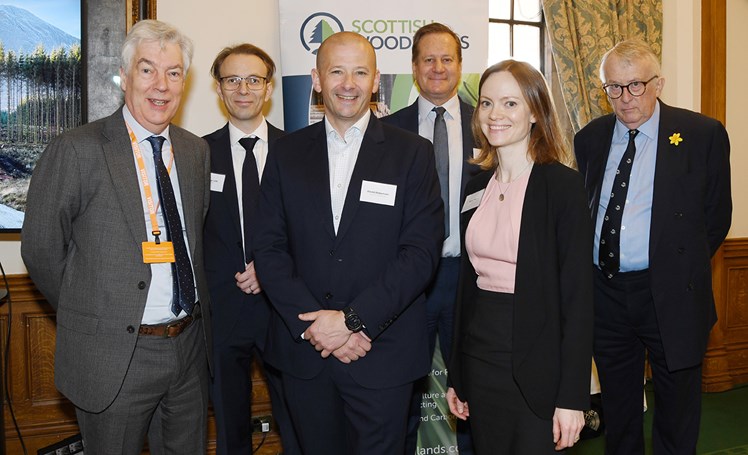
Mr Stone welcomed delegates and stressed the crucial value of forestry employment, especially in remote areas, including his constituency. He asked “Are we planting enough trees?” and said it was vital for politicians to engender confidence in forestry investors.
David Robertson, Investment and Business Development Director with Scottish Woodlands Ltd, said: “Five-year forestry returns are sitting around 9% per annum, and while gold is performing better at around 15%, other asset classes like commercial property are down at around 2 or 3%. Forestry is very stable during times of economic uncertainty, and like gold, acts as a defensive asset in difficult times.
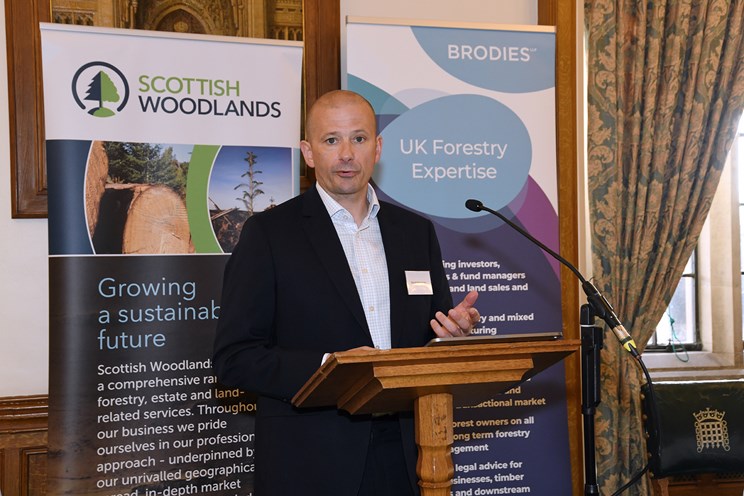
Mr Robertson said carbon and biodiversity markets were still evolving and should be treated with some caution.
Timber production remained the primary driver of value from forestry investments, he added, urging investors to take a “patient, responsible approach".
He concluded: “Forestry has always been a long-term business, and isn’t particularly suited to quarterly reporting cycles. But long-term demand for timber, and the policy drivers for woodland creation, makes forestry a strong and attractive investment option. In many ways, it has never been stronger.”
Paul Brannen, a recently-appointed Forestry Commissioner, former Labour MEP, timber advocate and author of Timber! How wood can help save the world from climate breakdown, said there were very strong reasons why the UK would need more timber, which would make forestry investment even more attractive in future.
“Opportunities to invest in forestry are directly linked to the growing need for timber in construction, and for biomass,” he said.
Mr Brannen said the UK has to build more homes using timber frames. Around 90% of new homes in Scotland are currently built with timber frames, but only around 10% in England. He said there was capacity to make around 35,000 timber frames per year in the UK, but this would increase to 40,000 soon - and because all the major housebuilders were investing in timber frame manufacturing, the potential is to grow this to 80,000 timber frames per year.
An increasing understanding of embodied carbon, and stored carbon (in buildings and wood products) will also push up the need for timber, Mr Brannen said.
Mr Robertson agreed, saying the “drivers have rarely been stronger” for forestry investment, from climate change targets, to housing demand, and nature recovery.
However, the UK is still importing 80% of the wood it uses, which was “an uneasy position to be in”, Mr Robertson said.
Stuart Goodall, Chief Executive of forestry and wood trade body Confor, said there was a growing understanding of the need for more UK-grown timber - to enhance future timber security as demand continued to grow.
He said political support for productive forestry and timber use across the UK was “positive and encouraging” - and praised Mary Creagh, UK Forestry Minister, for proactive, positive engagement with investors.
Mr Goodall ended with a call to action: “There is policy support for forestry, we have strategies and roadmaps, strong industry engagement and partnerships with the government. Now it’s time to deliver.”
Mr Robertson admitted it was not an easy time for forestry, and that investors needed clear and consistent policies and processes from the Government and its agencies.
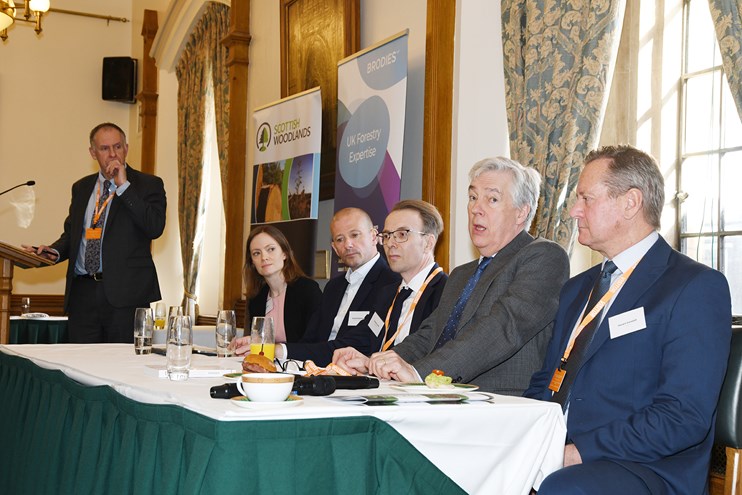
“Investors can handle complexity. What they don’t want is unpredictability," he said.
He said certain actors were using the judicial review process to thwart “perfectly good commercial planting schemes” - often based on their inherent dislike of productive forestry, and frequently deploying misinformation.
Mr Robertson said protestors were focusing on the process itself - which sometimes did reveal inconsistencies. He thought this presented a positive opportunity for the industry to ensure its processes were robust and Graeme Leith, a Rural Partner with Brodies LLP, agreed. He said judicial review challenges made the industry “better-equiped to avoid issues on other sites in future”.
Emily Pike, a Partner and taxation expert with Brodies LLP, outlined the recent changes to Inheritance Tax (IHT), which come into force on 6th April and affect all rural businesses. She said the changes had led to much more intentional tax and succession planning, often involving a wider range of ownership structures.
She said there was significant interest in UK forestry by international investors, and although it needed careful planning to reflect IHT changes, UK forestry was still very much seen as a stable asset.
Graeme Leith agreed, and concluded: “Well-managed forestry in the right place is considered a very safe asset by a broad range of investors."